
Nicolas Bonneville
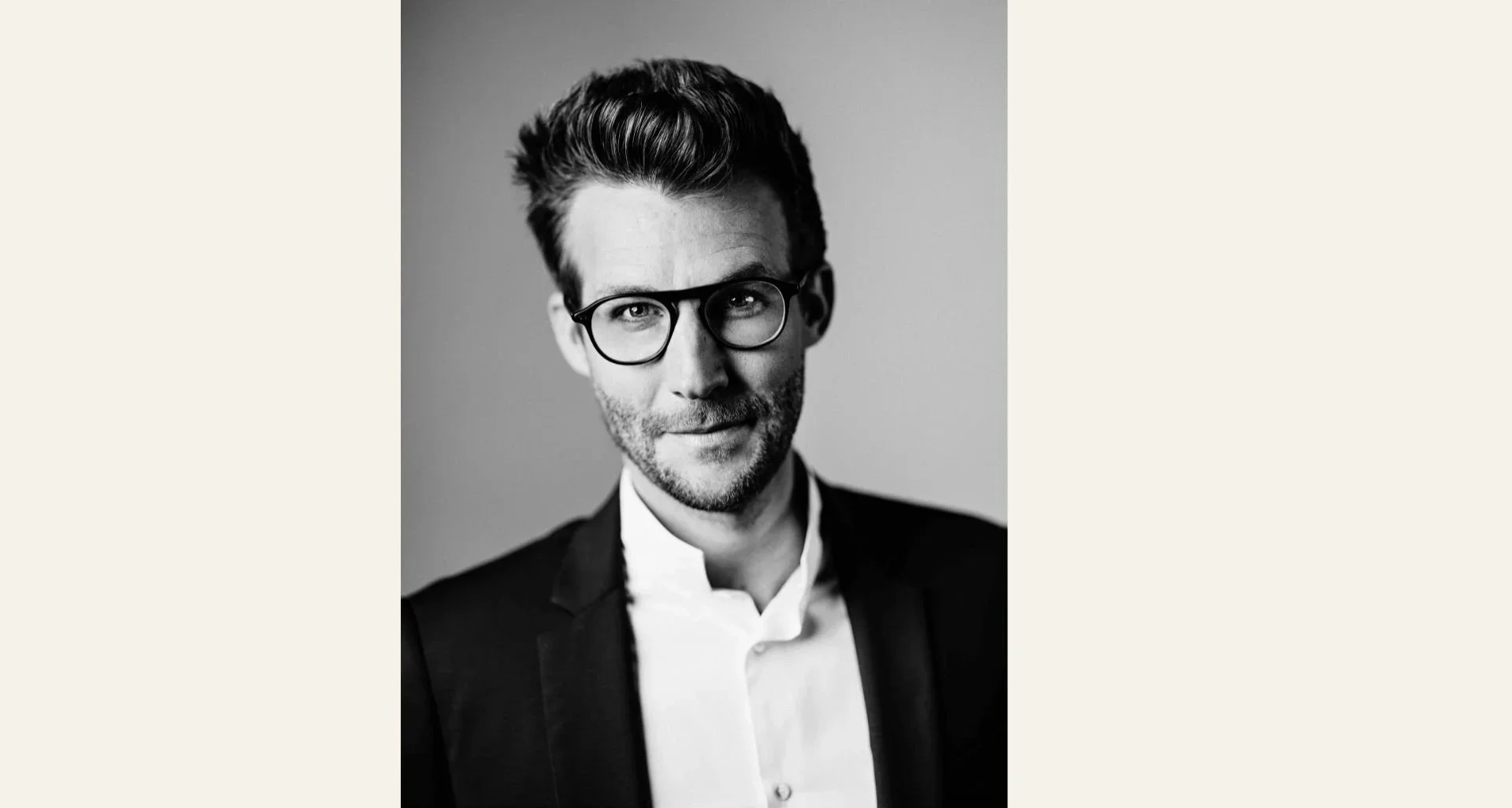
Born in Le Mans (home to the famous 24-hour car race), Nicolas first dreamed of becoming a perfumer as a young teenager, during a trip to Grasse. Taken at a young age under the wing of Grasse perfumer Jacques Maurel, he was trained in the ‘Jean Carles’ method – a classical style of perfume design – while learning about how ingredients are extracted, distilled, and make their journey from field to flacon, and he later trained alongside Francis Kurkdjian. Nicolas remains hugely inspired by natural ingredients, today working for a wide client base including Dries Van Noten, Prada, Acqua di Parma and Givenchy
When does your day start?
I used to work at home a lot before I was a dad; it was quite easy – but now it’s a different story, with a toddler son of 20 months. At home, I’m in a kind of bubble; in the office, there’s always someone wanting to show you the quality of a raw material, are you available for this meeting, can we have a quick chat…? Which is great, but it means you’re always being disturbed. It’s why I always work with music on; I need to be in my bubble, with nothing coming from the outside.
Breakfast is orange juice, fruit, some bread or biscuits. I live in Paris in the 16th, near Auteuil, on the west side, and my office is in Neuilly, north-west of Paris, so I have a bit of time in the car. I drive to the office and it’s a time for me to listen to music or podcasts. I’m currently very into a podcast by designer Jean-Charles de Castelbajac, called Parlons Mode, in which he talks about his creativity and his collaborative mindset, and how he gets very inspired by different media, art, music, etc. I find it very inspiring.
Then when I arrive at the office, it’s coffee-time. We have an Italian boss, so coffee is taken very seriously, and there’s a machine which makes coffee from beans. Coffee gives us the chance to chat with colleagues, evaluators, the commercial team, perfumers… Normally we’re all in our offices; we chat when we collaborate on a perfume, but if you’re not working alongside another perfumer, you don’t get to talk about your moods, or share thoughts.
“‘I always work with music on; I need to be in my bubble, with nothing coming from the outside.’”
Where do you work?
It’s classic office set-up with an identical office for each perfumer, avoiding an ego problem! At the end of the day, it’s just an office; you can bring your personal things.. The building is in a U-shape, with the perfumers in the corner at the end, and our windows look on to a small park. Lots of natural light, a feeling of being in nature.
How does your day break down?
I work much better in the morning when there’s nobody around. I’m an early bird, and before I had a little boy, I liked to get to the office super-early; that was my perfect moment. The first thing I do is to smell my blotters; you evaluate your dry-down, assess if there’s a technical issue… It’s a way to put your brain back to the day before, and then to send modifications to the lab.
Every day is different. There are meetings with clients, and more and more, perfumery is about teamwork and you have to adapt to your perfumer colleagues. The bigger clients want different types of expertise and fresh minds brought to a project – a certain sensibility for a type of ingredient, a feel for the youth market. Although working in niche, most of the time you’re working alone.
How many fragrances might you be working on at one time?
Probably five to 20, at different stages.
“‘Sometimes, when I’m really focused on a perfume, I actually dream about it.’”
How do you work?
I always compose in my head. Perfumers are more than a nose! For me, each raw material has its own shape, texture and function. It’s closer to sculpture, for me.
I trained with Francis Kurkdjian, and there was a synaesthesic experience around creating Baccarat Rouge – a sound, a taste; it was the ultimate experience within fragrance creation. When I was training with Francis, it was all about writing with a pen and paper – and he was right; when you write the name of a molecule, you’re better able to visualise it in your head. But in big companies like dsm-firmenich, we have computers and formulating software; you have a kind of map whereby you can see all your ingredients on a scale, to see which olfactive message you will give when you change something – it’ll tell you if a sandalwood will project at one metre, or four, and you can make your modifications, if it’s not what you were aiming for… But software is only a technical aid. Nothing beats skin.
Do you break for lunch?
I might go to a restaurant with colleagues, or get a takeaway and have it on the sofa in an area of the office… But at least once a week I like to have lunch at home, which is 15 minutes from the office. It’s my time, and a real break in the day.
When does your day end?
I tend to leave between 6-7pm – I certainly try to be home by 8, because my baby’s going to bed and I want to have a hug.
Do you continue to think about the fragrances when you get home?
I try to shut down. Sometimes I wear something on my skin, and I actually need to wash my hands, because it’s too powerful; I’m still thinking about it and it reminds me of work.
But sometimes, when I’m really focused on a perfume, I actually dream about it. There can be a moment of inspiration, and I get a solution to a challenge – and so I take my phone and write down the idea in the middle of the night: maybe it’s a little too woody, needs more freshness… It’s as if I literally had the blotter under my nose.For me, perfume is very emotional and instinctive. When you feel it, you know. Roudnitska [perfumer Edmond Roudnitska] said that when you have an idea, you have to create it right now. If you put a note on paper, you will read the note – otherwise it’s too easy to forget.
Is a moodboard helpful to you?
Yes, because most people don’t have an olfactive education – so you need to have words or a common vocabulary with the brand you’re working with, and moodboards and colour can be a good form of communication, to ensure that you are speaking the same language.
What is the most number of modifications you’ve ever had to do, on a fragrance? And the least?
The most was honestly between 4-5,000, working on a project with a team of perfumers. But if it’s an accord that I’m working on by myself, maybe 30-50 trials… or even as little as 20. Mostly, the number of modifications for a client is between 50-100.
How many materials do you have at your fingertips, to work with? And how many tend to be in your regular palette?
At dsm-firmenich we have between 1-2,000 to work with – but personally, I think I’m working with 400-500.
Do you listen to music while you work – and if so, what?
I love listening to music when I work. It might be electronic or pop music; I really like Daft Punk, Michael Jackson… I like to have music with loops and layers, so that the guitar comes in, the voice… it’s an echo of the creation of a fragrance.
What is the one fragrance you wish you had created?
Dior Homme. It’s wonderful. Orris is often a favourite material, for perfumer, but it’s unusual in a men’s scent. It was such a great creative idea, from that master of fashion, Hedi Slimane.