Julien Rasquinet
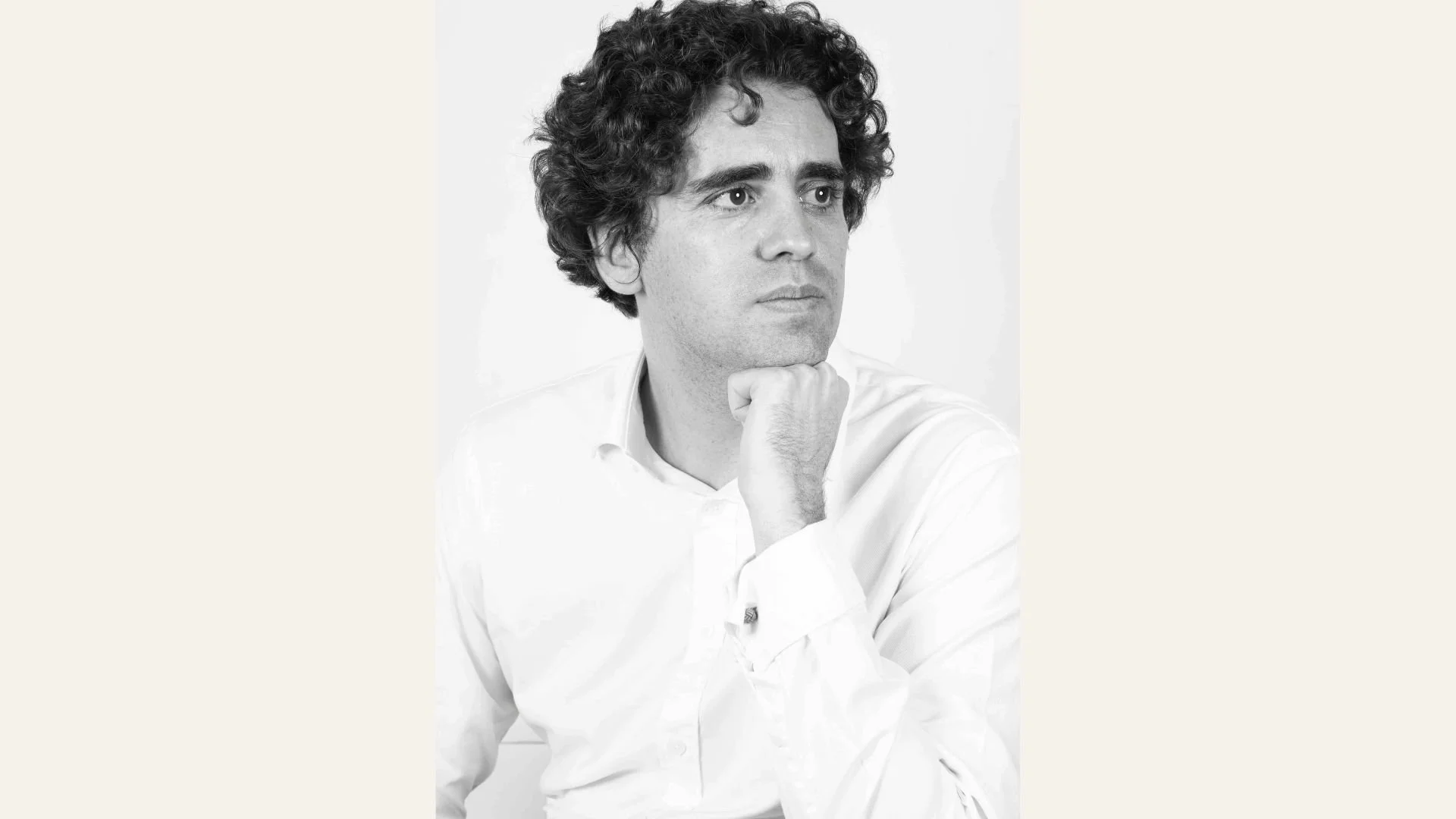
Now working in Paris for British fragrance house CPL Aromas, this talented perfumer shares insights into days spent creating for some of the most exciting perfume brands in the world
Unusually for a perfumer, Julien Rasquinet initially graduated from business school before discovering his passion for fragrance during an internship in New York. Following a chance meeting at an airport between his father and Pierre Bourdon, he went on to be mentored by the legendary perfumer for three years, trained in the ground-breaking styles of Jean Carles and Edmond Roudnitska, founding fathers of modern perfumery.
For many years, while working for IFF (International Flavors & Fragrances), Julien lived in Dubai, gaining experience with Middle Eastern clients and for niche brands including Naomi Goodsir, Elegantes and BDK Parfums. In 2023, he moved to CPL Aromas France, as Senior Perfumer, where he continues to ‘awaken emotions’ via his work.
“‘I think about creation even when I sleep and during weekends, holidays! It follows me absolutely everywhere’”
When does your day start?
I start with coffee before I’m even able to talk to anyone. Then I go walking our puppy. I live in Neuilly-sur-Seine, close to the lake and the horse-riding school in Bois de Boulogne, and even after six years, every morning I am still amazed by the beauty of that area. It is full of jasmine from mid-spring to September, I can smell the horses, the linden blossom, the butterfly bushes, and I simply enjoy watching all the freshwater birds that live here.
I then have a breakfast with my wife, the artist Irina Rasquinet, and our two boys. I currently try to avoid any bread! After 40, croissants and pains au chocolat are really out, so I go for eggs, avocados, with more coffee. Then I walk for half an hour to the CPL Aromas office on the rare non-rainy days in Paris.
Where do you work?
Our offices are in Suresnes, in the Paris suburbs of Paris, which has the allure of a small village, with a small square around which the Wednesday market and all the restaurants and facilities are located. We have a fantastic view of the Seine river, which makes our offices an extremely romantic place.
When I don’t travel, I am pretty much at my desk every day. I don’t like remote working, as I need to have exchanges with people, to smell ingredients three to four times a day, to check samples, smell thing to benchmark against… I cannot do all that from home. From my office, I can see the labs! That’s something I love at CPL, and its human size; I had been cut from the lab for the last 10 years in my previous job, yet this is the true heart of our activity!
How does your day break down?
I smell better in the morning, and I am more focus, though since I joined CPL, I need to stay focused until quite late in the evening, too. First thing, I will smell the first essays my lab assistant compounded for me (with the help of a state-of-the-art robot that can compound 60 to 80% of my formula in only a few minutes) and then I will adjust my formulas to the idea I had in mind. But my days are also quite often busy with customer visits or travel.
How many fragrances might you be working on at any one time?
I may have around 20 to 30 open projects. I would say probably 100 ideas are currently in the hands of my customers. Most of them will die on their desks, and a few will continue their rework process until some eventually launch. The ones that are dropped off will probably be useful, either because they taught me something, or because they might be a good starting point for a further project.
How do you work?
I formulate in my head, and have an idea of what it will smell like. But I believe perfumers can’t have a vision as precise as music composers when they compose in their head. Our notes are more numerous, can be used with more variations, and some ingredients are complex – already a symphony by themselves. That’s why we need to modify, trying to get closer to the idea we had at the beginning, but also sometimes be guided by the surprise of an effect we didn’t necessarily expect.
Formulas are then entered on the computer to ensure they comply with regulations, and match the requirement of the customer. Then it is sent to the robot and my assistant will complete it with the resins, or the powders that need to be incorporated manually.
I need to get into the lab easily, to have contact with my assistant, to dip my blotter in some ingredients. When I was younger and independent, I used to compound my own formulas, and I kept rewriting them during the compounding… I believe I had some of my best ideas like that.
What kind of other inspirations do you look for, during your day?
Talking with customers. I am lucky enough at CPL Aromas to be in a structure that encourages perfumers to talk to our customers – about what we enjoy in life, understanding the level of risk they want to take, the vision they have for their brand/launch.
Do you break for lunch?
I like to go out every other day, with colleagues, or sometimes myself. I also like to order food and have lunch with the whole office. We are small and family- owned – something you can also feel in everyone’s easy-going attitude.
Do you continue to think about the fragrances when you get home?
I go back home around 7.30pm, and of course I keep thinking about creation! Sometimes even when I sleep and during weekends, holidays! It is following me absolutely everywhere. There’s nothing I can, and nothing I want to do, to stop that.
Do you need to be in a particular mood, to create?
I need to be extremely calm; I need everyone to leave me alone, and can even become kind of irritated if someone interrupts constantly an act of creation. I am constantly disconnected from Teams, and almost always have a Do Not Disturb sign on my door.
You’ve collaborated several times with David Benedek of BDK. What is that creative process like?
Working with David is an extreme honour and a great pleasure; we have a relation of trust and even friendship, now. We started when his brand was still quite young; I was seduced by it immediately, and then we met. I was instantly touched by his poetic style, his intuition, his romantic approach to perfumery, his education and respect for people. He had something special, and that can really be felt throughout his line of creation.
“‘There’s no magic formula that says more trials equal a more beautiful fragrance’”
The first came to me with the idea of working on a rose, which became BDK Tabac Rose. David had the idea of incorporating a tobacco note, which resonated immediately as it had been a long-time obsession. As a teenager I was not a smoker, but I kept a pack of tobacco from a famous French brand, that was flavoured with peach, chocolate, vanilla. I would return time and again to smelling that tobacco.
Since Tabac Rose became quite a success for the brand, David came to me again, and we created Ambre Safrano. David had that idea of a burning amber, which was very inspiring. Amber can be perilous; like rose, it is often old-fashioned, but ours needed to be extremely modern by going away from the animalic facets of amber, making it extremely boozy and vanillic, with burning saffron on top and a soft leather.
How long does it take from concept to finished fragrance, in general?
It takes 18 years of experience, plus the time I spend on a specific project. It can sometimes be very quick, but mostly, it takes about a year.
Do you listen to music while you work?
Yes. I have a bit of everything on my phone. It can be rock disco, pop, ridiculous blockbusters, some electro and a bit of rap.
Is a moodboard helpful to you?
It can be, but really anything the customer wants to share can be useful. Recently I have been briefed with playlists and loved it !
What is the most number of modifications you’ve ever had to do, on a fragrance? And the least?
The least is zero, for Iris Cendré, by Naomi Goodsir. We’d been working for one year, made dozens of mods, but each time the customer and I came back to essay number one!
The highest number of modifications was due not to the customer, but to a salesperson who always had trust issues with her teams, and was trying in vain to take on the artistic direction. We were three perfumers going down nine different routes, showing the customer less than 5% of the work done. I was almost happy we failed in the end, as the development had become a complete nonsense. After this project I became conscious how important it is only to accept projects that I believe I will enjoy.
How many materials do you have at your fingertips, to work with? And how many tend to be in your regular palette?
We have around 1500, but I think I use probably around 600-800.
How much of your time is spent on your own work – creating new accords, etc.
I used to say it is key to spend 20% of your time working on ‘fundamental research’. I was loyal to that approach for years, probably because I was less busy than now, and had that time available. I must admit that percentage drastically went down to around 5% of my time. But still, even when an idea isn’t a direct fit to the project I am currently working on, I will take the time to explore it. If it’s not useful there, it might be useful somewhere else.
What is the one fragrance you wish you had created? From the past, Aromatics Elixir. In the recent years, Velvet Tonka by Alexandra Carlin for BDK PARFUMS.