
A Day in the (Perfumer’s) Life: Natalie Gracia-Cetto talks to On The Scent
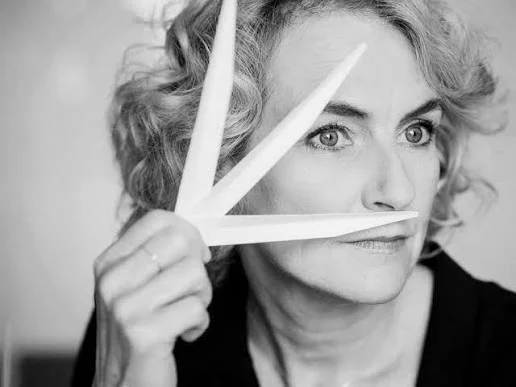
This senior perfumer at Givaudan in Paris talked to On The Scent’s Sharon Whiting on a trip to London to present a recent creation, Diptyque Orphéon Eau de Toilette
Raised between Cairo (Egypt) and Grasse, Natalie Gracia-Cetto originally trained as a pharmacist and came to perfumery after earning a doctorate in pharmacology. Her fragrances have often been described as ‘bringing a smile’, as she deftly treads the line between scientific rigour and that love of light, expressed by what are often described as ‘optimistic’ compositions. (She’s been described as someone who will obsess over the precise shade of light she wants a perfume to evoke…)
She joined Givaudan in the mid-1990s and after creating fragrances for brands including Burberry, Chloé, Fragrance Du Bois and Tom Ford, her responsibilities now include mentoring the next generation – the perfumers of tomorrow.
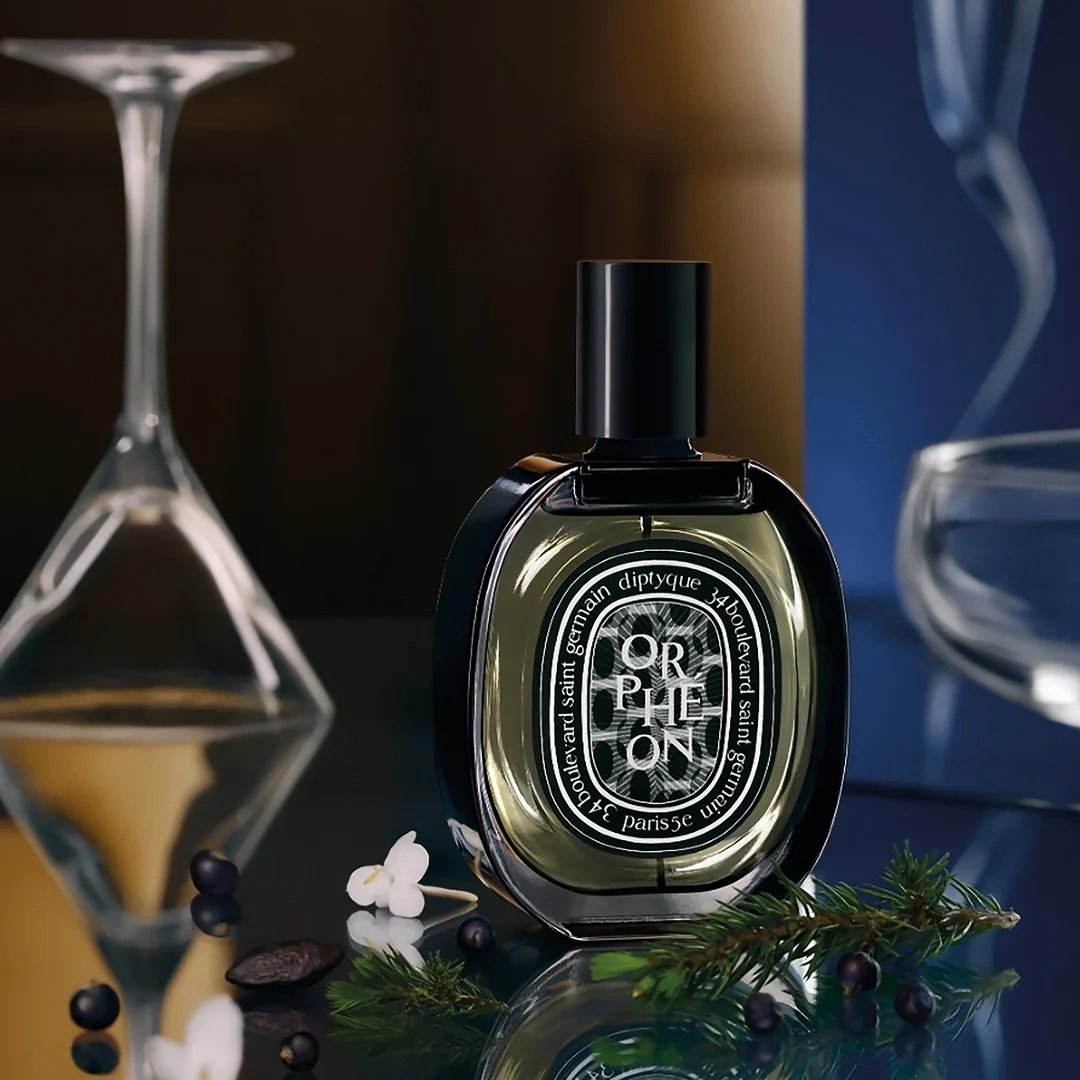
Diptyue Orphéon Eau de Toilette by Natalie Gracia-Cetto
When does your day start?
I don’t like to work from home. I like to separate things – I have my perfumer’s life and my mother/wife life as two different things. Even if something is your passion, and you live your passion 24 hours a day, you need to separate things.
So, I am not such a morning person – I usually arrive at work, in the lab or in my office, at half past nine or 10 – a gentle start to the day, which starts by drinking tea. And every morning for my breakfast I eat toast with Marmite, or my own home made orange marmalade. I think I got these habits from my Mum; she’s not English, she’s from Alsace (and my father was German) but they used to live in South Africa, so maybe the Marmite came from there. My friends are like, ‘how can you eat that, the smell is disgusting!?’
Is there anything you don’t like the smell of…?
You know when clothes haven’t dried properly and they smell of mildew? This is a bad smell for me. But the smell of petrol I love…there are many, many so called ‘bad smells’ that I really quite like.
How does your day break down?
It depends on how I’m feeling or the urgency of the project and other things that might be outside my control, but I don’t have a particular creative time or business time. It’s all mixed for me depending on the day.
How many fragrances might you be working on at one time?
It depends of course on the time of the year and my particular workload, but I would say at least 10 – and it could be up to 20.
We have two very different models of working, when we work for what we call ‘haute parfumerie’ or niche brands, in which case the client usually briefs us exclusively. For example, when I was working on Orphéon Eau de Toilette for Diptyque, I worked on it alone. But when we work for brands L’Oréal, Coty, Puig etc., we are briefed and then we are in competition with other fragrance houses and inside each fragrance house there may be many perfumers working on the same project, each proposing their creative ideas. This also means that because of this competition you may work on projects but in the end, it might not be your fragrance in the bottle. For this reason, you can’t only be working on one project at a time as you may only have one opportunity out of 20 so you are forced to work on many different projects which is good, I think. It actually has many virtues as it makes you take a step back from one note to another, one project to another and gives you time for reflection.
So, that’s the story of competition – and you cannot say that when you start a project, you will be on it until the end. The other interesting thing about working on several projects at the same time is that for some you will be working at the beginning, and some will perhaps be at the end, where it’s really fine tuning….it’s like when you draw a picture and you want to add a finishing touch.
How do you work?
We do use computers, and we have a programme to formulate which gives us the price, the norms and we compose our formula on this programme, so formula’s aren’t written by hand anymore. When I’ve finished my formula, it is sent to the lab, and my assistant will weigh and I can smell the sample, and we work together. But the first idea, it’s born in my brain, that’s where everything comes from, before I start working on the computer.
When you take a brief does your brain immediately start composing a formula?
“The first idea is born in my brain – that’s where everything comes from, before I start working on the computer”
That can happen sometimes if the brief is very inspiring, which it is not always the case! But sometimes there is a moment when you think, yes – that is what I need to do!
What kind of other inspirations do you look for, during your day?
I am quite a curious person – I love art, I love music but inspiration can also come from colour association, from something you eat, from a character…..from pretty much anything. A poem, just a sentence or an energy. Sometimes I listen to music when I am at the beginning of the creative process, just randomly, and then from that music I get a kind of energy that gives me a kind of creative urgency.
But our job is not only creation; we are like artisans (for example, a potter); we have all these raw materials that we have to harmoniously combine and this is what any artisan does with his materials. You do one trial after the other and the perfume is not only one trial, sometimes it can be like 200, 400, 600 trials.
When does your day end – and do you continue to think about the fragrances when you get home?
I go home around 7.30 or 8pm. I am not a morning person, so I arrive at Givaudan’s offices at around 9.30/10am – and, well, the work has to be done! Before leaving my office I will spray the latest project I am working on and this smell stays with me all evening. It’s not the same relationship with the perfume as I have in the office, it’s more abstract and I may simply get a sense that I should try and push one element or another. But that doesn’t happen every day, and usually I can switch of and be with family when I get home. I like to stay late at work because from 5.30, six o’clock, everything is quieter and I can concentrate. In fact, it is maybe the time when I can concentrate the most.
Do you need to be in a particular mood, to create?
It depends how inspiring and exciting the project is and when it is, it gives me the energy, the pleasure…..You know, at this time in my life, I am really concentrating on what gives me pleasure. I think you have to be mature to realise what is important and when you do, you work better. It might sound pretentious to say it, but I think that when creation gives you pleasure, you put that pleasure in the bottle and you can share it with people. And you make better perfume!
Explain your working relationship with Diptyque – what’s the process?
It is pure joy! Diptyque is a brand that I have always loved. It is a very desirable brand for a perfumer, and as a consumer I could buy everything in that shop! As well as being a joy it is also an honour, because they choose the perfumer they want to work with – and also it is quite emotional for me because at Givaudan, Diptyque used to work with a very dear friend of mine, Olivier Pescheux, and he sadly left us much too early [Pescheux died in 2023] and I took over from Olivier. For example, on Orphéon he worked on the Eau de Parfum and I worked on the Eau de Toilette. The same with Diptyque Fleur de Peau; he created the EDP and they asked me to work on the ETD. So, it’s quite emotional, but I also love what he did for Diptyque; every perfume that he did was a masterpiece and I have to honour his work. It means I feel a huge responsibility, but this also creates a good energy – and I am so grateful to Diptyque, so grateful to work for this beautiful brand which gives me the freedom to create, which pays attention to artistry.
Talk about Diptyque Orphéon EDT and what you enjoyed about its creation – and how is it different to the original?
For Orphéon they didn’t give me a moodboard; it was more ‘how would you reinterpret the atmosphere of the Orphéon club?’ Because the perfume is all about the story of the club where the founders of Diptyque used to go, because it was right next door to their first boutique on Boulevard Saint Germain.
So, when Olivier worked on the EDP he conjured the ambience and energy of a night at that club. The team asked me to work on imagining not the heart of the night, but that night beginning: the moment when you enter the club and everything is possible…maybe you will meet someone, the musicians are just starting to play, you have your first gin and tonic. I was reinterpreting the same place but at a different point in the evening. So, that was my brief and I thought it could maybe be more sparkling, brighter more luminous, less dark and smoky and powdery more vibrant and fresher. That was the guiding light for the brief.
“I think that when creation gives you pleasure, you put that pleasure in the bottle and you can share it with people. And you make better perfume!”
Tell us about the inspirations for the other Diptyque fragrances you have worked on…
Lilyphéa and Bois Corsé are part of a collection of six fragrances, Les Essences. The brief was lovely – it was all about nature’s masterpieces – but it was also about time. Nature takes time to create a masterpiece, such a pearl, coral, the bark of a tree, so that was the general idea [other perfumers’ fragrances are Lunamaris, Rose Roche, Corail Oscuro and Lazulio]. It was all about imagining the scent of these natural masterpieces that don’t really have a smell. Bark, waterlily leaf, coral….
It was a very open brief, but very inspiring. For Bois Corsé it was the story of bark, any bark, really….I was working on this brief in a more sensorial way than an olfactive way. Bark is rough, but it also protects the heart of the wood, which is tender, so I was working on this contrast between something quite rough and something very tender and smooth. For the roughness I used cedarwood which is quite a dry wood, with rich black coffee absolute. That’s why it is called ‘Corsé’; in France when you want a very strong coffee, you ask for a ‘corsé’, so the name of the fragrance came afterwards because of this association with a coffee that is kind of rough. This is contrasted with sandalwood which is a very milky and tender wood, and this is the addictive part of the fragrance.
And Lilyphéa is also a story of a contrast, because when you imagine water lilies dancing on the water you imagine the leaves being quite thick, but also crunchy – yet there is also something smooth in that thickness, which gives a softness. When I imagined the lily flowers dancing on the water, I imagined something quite thick and crunchy but also something quite smooth, and this combination results in a kind of softness. The greenness comes from galbanum and violet leaves to give this crunchy, green note, with vanilla and musk for the smooth part. It makes you want to lie on it; like a mattress on the sea, you are lying on a huge leaf of water lily…
How long does it take from concept to finished fragrance, in general?
It depends on many factors but I would say on average it takes between six months and a year from the briefing until final evaluation – but then, after this validation, it can take another year and a half until it comes to market. It is a long process!
The question we often have is ‘when do you think your perfume is finished?’ – and I think it is a very interesting question, but I find I am still asking myself, on some projects, because it could be that it is never really finished and you could always rework and change….a little more rose, a little more jasmine. For me, when we work on a creation we generally do maybe two, three, four, five trials at the same time and we smell them all together. And we say ‘OK, this one is better,’ or maybe these two; we smell them on blotters and then we smell on skin. At that point, if I have a hard time choosing one (we are always very critical with our work) and I think well, I like this one, and I like this one so whichever one the client chooses, it doesn’t matter……then I know it is finished. For me there is so little difference between them but the global image, the global emotion? I achieved it!
What is the most number of modifications you’ve ever had to do, on a fragrance? And the least?
The most is 200, 400 even 600 but the least I have ever done is maybe three; it can happen! If you have a great idea and it has all the technical requirements – strength, sillage etc it can happen. You have a real ‘coup de coeur’ and the client says yes, that’s exactly what I want. It’s a really nice feeling but it doesn’t happen very often……maybe once in a lifetime (laughs). It can be frustrating when you are not aligned with your client.
Do you listen to music while you work, and if so, what?
I do listen to music, very, very often! I am very eclectic in my music tastes, and I listen to many different things – British pop but also electronic music…so many different things.