
A Day in the (Perfumer’s) Life: Louise Farina
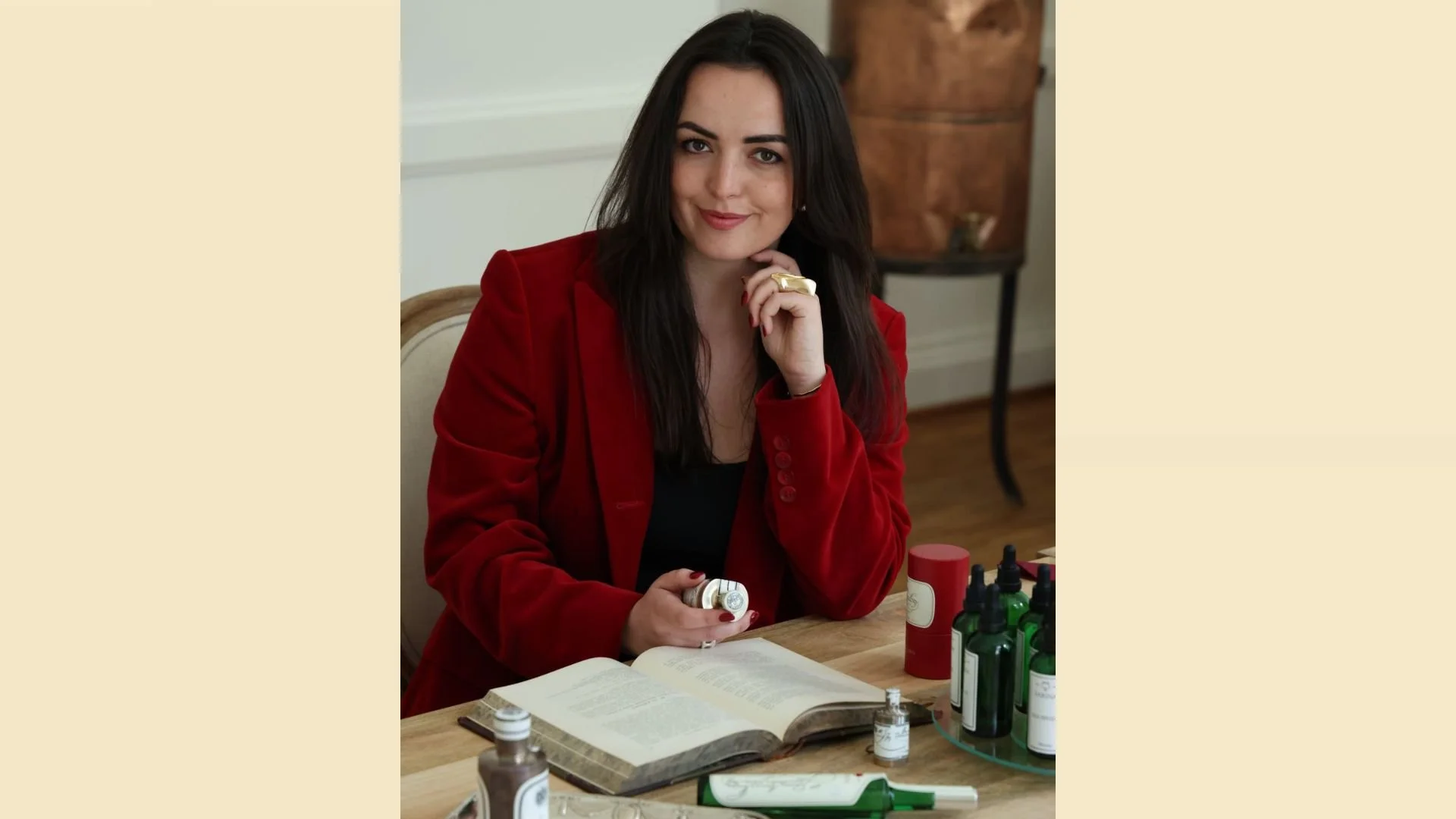
Louise Farina represents the ninth generation of the remarkable family behind Farina 1709, the Cologne fragrance house widely recognised as the world’s oldest. She’s the first woman to lead the brand.
Founded by Johann Maria Farina in 1709, its original Eau de Cologne became an international sensation, admired for its light, sparkling freshness. The house has remained in family hands for more than three centuries, continuing to produce its celebrated citrus-aromatic composition in Cologne, where its museum and historic premises are a portal to perfume history. (And definitely right at the top of our scented bucket list.)
Trained at ISIPCA, Louise is carrying that heritage forward in a contemporary way, with the with an intimate understanding of the extraordinary legacy behind the name, with the exciting Série Extrait de Cologne. Here, she tells On The Scent about her inspirations, her creative day – and what it’s like working in a building that is the very heart of fragrance history.
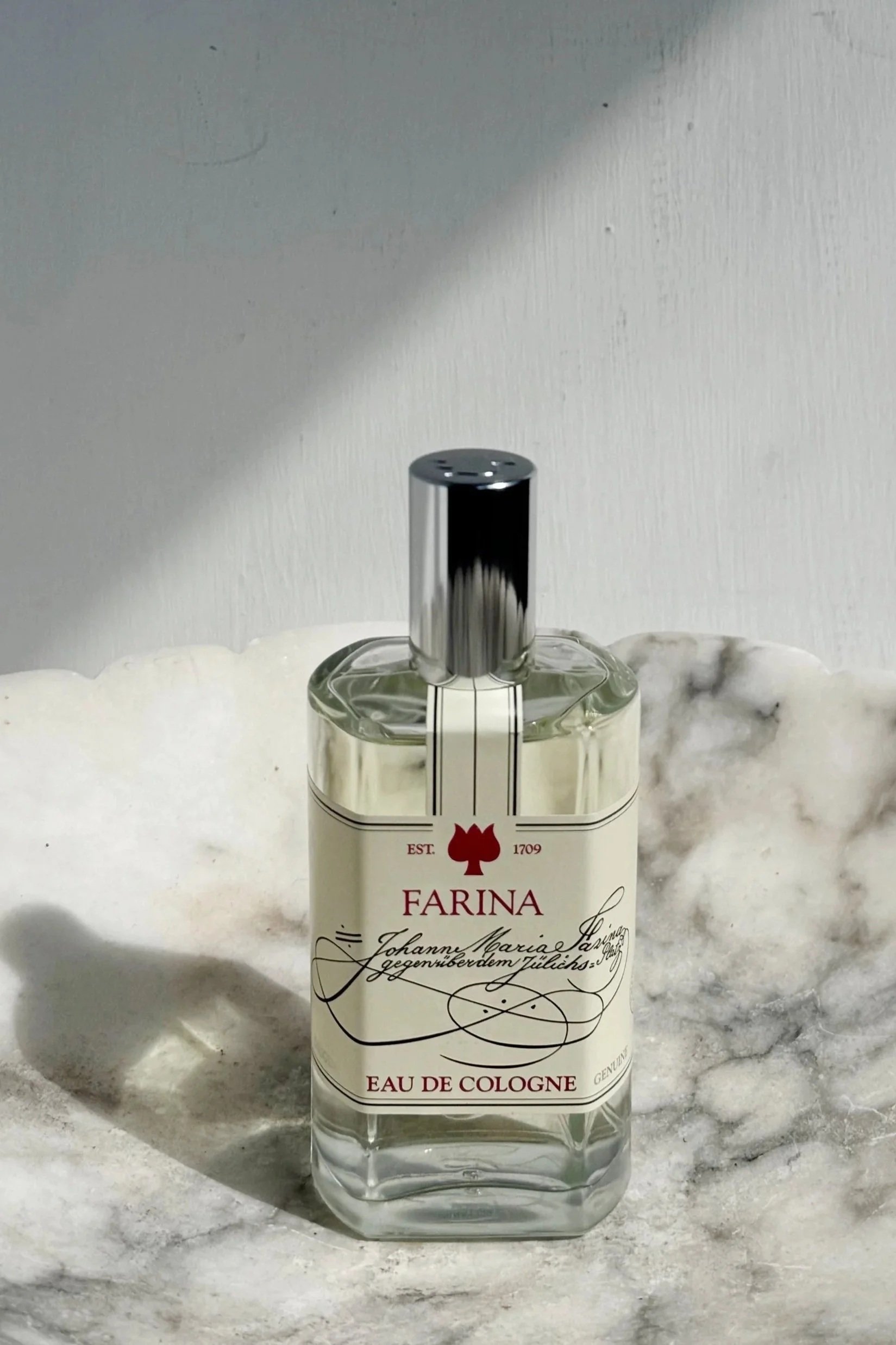
Classic, timeless – and as refreshing as when it was composed in 1709. Farina Original Eau de Cologne PHOTO: JO FAIRLEY
When does your day start?
I usually get up around 7am and often start the day with some exercise or by riding my horse. Before leaving for the office, I already answer my first emails from home, usually with a cup of matcha that I prepare myself. Our distributor in Japan kindly sends me authentic Japanese matcha, so it has become a little morning ritual.
I'm generally at the office or in the atelier by around 10am. Every day is different, but I generally prefer to do creative fragrance work either in the morning or in the afternoon, as evaluating and developing fragrances requires a great deal of concentration. I also like having enough flexibility in my schedule. Sometimes my most productive hours are in the evening, and if I'm really immersed in a project, it's not unusual for me to work late into the night.
Where do you work?
I work in the Farina House in the heart of Cologne, where Johann Maria Farina founded the company in 1709. It's a truly unique place to work, as our offices, atelier, boutique and museum are all located under one roof. Every day, I'm surrounded by more than 300 years of perfume history, which is both inspiring and humbling.
My work is divided between my desk and the atelier. Some days are dedicated to creative fragrance development and evaluation, while others are filled with meetings, product development, press interviews or introducing our fragrances to retail partners from around the world.
For the creative development of our fragrances, I work closely with Creative Director Nicola Pozzani. Together, we shape the creative vision for each fragrance before working closely with the perfumers at MANE, particularly Julie Massé and Mathieu Nardin, who translate that vision into fragrance compositions.
How does your day break down?
It really depends on the stage of a project. During the development of our recently launched Série Extrait de Cologne, there were periods when I spent weeks almost entirely evaluating fragrance modifications and refining every detail in the atelier.
Now that the collection has launched, my focus has naturally shifted. Much more of my time is spent introducing the fragrances to our retail partners, presenting the collection, and sharing the stories behind each creation. There are even weeks when I don't spend any time in the atelier at all. But it never takes long before the next idea or project draws me back into the creative process.
I also try to schedule creative work either in the morning or later in the afternoon, when I can concentrate without interruptions. Fragrance evaluation requires a great deal of focus, and I've learned that taking breaks in between often leads to better decisions than trying to push through for hours.
How many fragrances might you be working on at one time?
The very first project I worked on after graduating from perfumery school was the Série Extrait de Cologne, which has just been launched. Instead of creating a single fragrance, we developed six at the same time, each with its own character, story and identity. It was an incredibly ambitious project and demanded an enormous amount of time, dedication and creative energy.
Looking back, I can't imagine a more rewarding way to begin my career as a perfumer. It is, without doubt, the project of my life so far. In the future, I'll mostly work on individual fragrances, but I'm incredibly grateful that my very first project was such an extraordinary creative journey.
How do you compose fragrances?
Everything begins in my head, long before anything is written down. I usually start with a feeling I want someone to experience the very first time they smell a fragrance: a memory, a place, an emotion that I want to translate into scent. I think far more in images and stories than in technical terms.
Once that world feels real to me, I begin writing it down by hand. I fill notebooks with impressions, references and associations rather than formulas: what a moment felt like, what it looked like, what memory it belongs to. That becomes the creative brief that guides the entire development.
I don't create the actual formulations myself. My focus lies in shaping the creative direction and then evaluating every modification against it, sometimes for months, until the fragrance finally captures exactly what I had in mind from the very beginning.
What kind of other inspirations do you look for during your day?
I think the greatest source of inspiration comes from real experiences. Many of the ideas behind my fragrances are inspired by places I've travelled to, memories from different stages of my life, and moments that have stayed with me over the years.
“‘I fill notebooks with impressions, references and associations rather than formulas: what a moment felt like, what it looked like, what memory it belongs to’”
France and Italy have always played a special role, not only in my own life but also in the history of Farina. They shaped the story of Eau de Cologne from the very beginning, and I was fortunate enough to study in both countries. That created a very personal connection. When we developed the Série Extrait de Cologne, many of my own memories and experiences became intertwined with the historical places, emotions and stories that have surrounded Eau de Cologne for more than three centuries.
I believe that if you want to be creative, you have to allow yourself the time and space to experience life. That's why breaks are just as important as the work itself. Often, the best ideas come when you're not actively looking for them.
Do you break for lunch?
I almost always take a proper lunch break. I love good food, especially Italian cuisine, and I think sharing a meal is one of the best ways to exchange ideas. Many of my business meetings take place over lunch, and I really enjoy taking the time for them. For me, it's an important part of the day rather than something to rush through.
What will the afternoon be spent on?
I usually work until around 6 or 7pm, although every day is a little different. If I feel that I need a break or a change of scenery, I might leave a little earlier and continue working later in the evening. It certainly doesn't mean the day is over. Fragrance is never something I simply switch off. New ideas often come to me in the evening, during a walk, while cooking or even just before falling asleep I often find that some of my most creative hours come when everything is quiet and there are no interruptions; if I'm working on a project that really excites me, it's not unusual for me to continue working late into the night.. The same is true at weekends. I actually enjoy working then because I have the space to think. Creativity doesn't follow office hours.
Do you need to be in a specific mood, to create?
I definitely need a certain sense of calm. If my mind is too full with meetings and day-to-day business, it's much harder to be creative. For me, creativity requires space. I often describe it as being in the right state of mind. When I'm calm, curious and fully present, ideas come naturally. That's why I think taking breaks and allowing yourself time away from work is just as important as the creative work itself.
“’I actually enjoy working in the late evening and at weekends because I have the space to think. Creativity doesn’t follow office hours.”
How did you become a perfumer – and how did you come to be the perfumer at Farina?
I grew up surrounded by fragrance. From a very young age, my father shared his passion not only for perfume composition but also for the natural raw materials behind it. I still remember him coming home with the latest harvests of bergamot or jasmine oil, holding them under my nose and saying, ‘Isn't this beautiful? Smell this.’ Those moments sparked a fascination that has stayed with me ever since.
Later, I studied chemistry in Cologne before specialising in perfumery at ISIPCA in Versailles, where I had the opportunity to deepen both the scientific and creative aspects of fragrance creation. Returning to Farina as the ninth-generation perfumer felt like a very natural step. It allows me to continue a tradition that began in 1709 while also developing new creations that bring the Farina philosophy into the future.
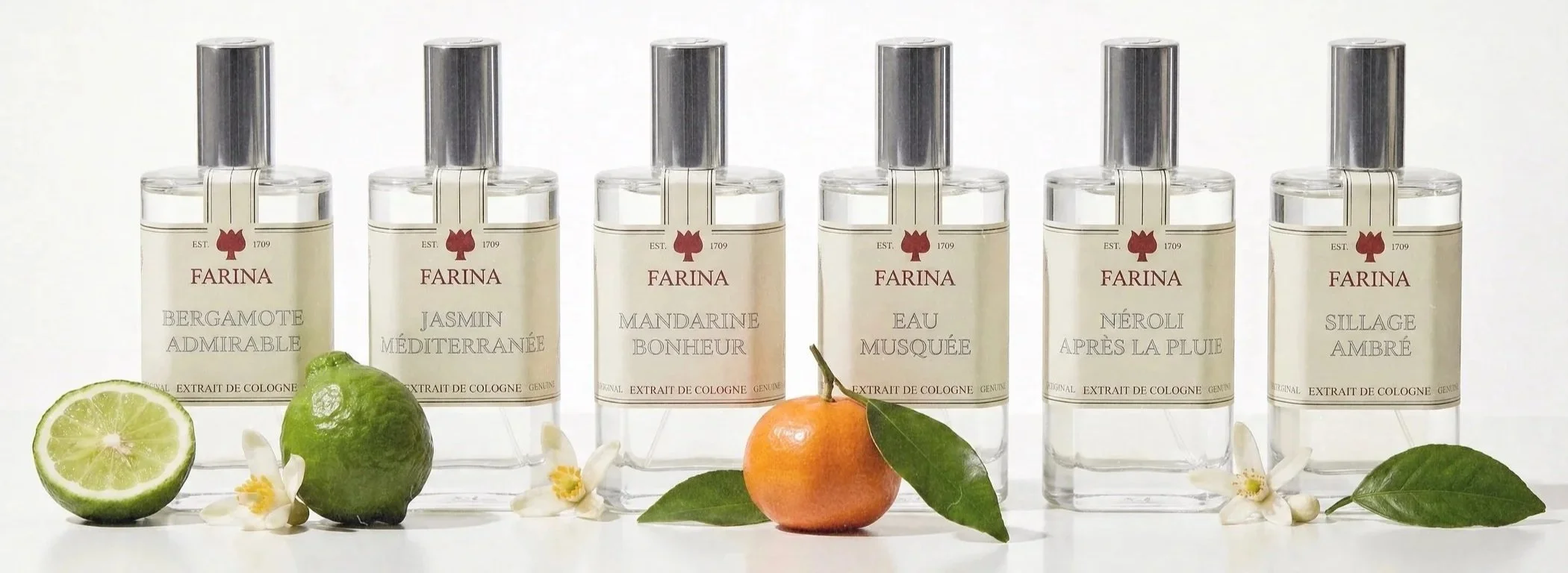
The six fragrances in Farina 1709’s Série Extrait de Cologne, all of which showcase a particular material from the original formula
Tell us about the inspirations for the new Farina Colognes collection…
The inspiration for the Série Extrait de Cologne came from many different places, but always through the lens of Farina's history. Italy and France played a particularly important role, not only because they shaped the history of Eau de Cologne, but also because they have shaped my own life. I studied in both countries, travelled there extensively and have countless personal memories connected to them.
Every fragrance became a journey through places, emotions and history. Sometimes inspiration came from architecture, sometimes from food, landscapes or historical personalities. We wanted each fragrance to tell a story that felt both deeply personal and deeply connected to the Farina heritage.
They were co-created with other perfumers, including Nicolas Pozzani. How does that relationship work?
Our Creative Director Nicola Pozzani and I spend a great deal of time together discussing ideas, not only in the atelier but also over long dinners, while travelling or simply walking through cities. Some of our best conversations happen away from the fragrance itself. We both believe that fragrance is about much more than ingredients. It's about culture, history, architecture, art and emotions. Those conversations became an essential part of the creative process and helped shape every fragrance in the collection.
Were there any visits to places or exhibitions?
“‘I actually prefer complete silence when I’m working. Fragrance already demands so much concentration that I don’t want any additional stimulation. Silence allows me to focus entirely on what I’m smelling and feeling’”
We constantly discussed things. But some of the strongest ideas came from experiences we had independently of one another. One of my favourite memories happened almost by coincidence. I was visiting Schloss Augustusburg in Brühl, one of the finest Rococo palaces in Germany and closely connected to Clemens August, one of Farina's most important historical customers. At exactly the same time, Nicola was visiting a Marie Antoinette exhibition in London.
Without speaking to each other beforehand, we both came to exactly the same conclusion: Rococo had to become a central inspiration for the collection. The sense of lightness, elegance, optimism and new beginnings perfectly reflected the world in which Eau de Cologne was created. It was one of those rare moments when everything suddenly fell into place.
Do you listen to music while you work?
Never. I actually prefer complete silence. Fragrance already demands so much concentration that I don't want any additional stimulation. Silence allows me to focus entirely on what I'm smelling and feelinhg.
How long does it take from concept to finished fragrance, in general?
I don't think there's one answer to that. Every fragrance has its own rhythm.
For the Série Extrait de Cologne, the creative journey lasted around two and a half years. In fact, many of the first ideas came to me while I was still studying perfumery. Some fragrances come together surprisingly quickly, while others take countless refinements before they feel complete. That's part of the beauty of the process.
Série Extrait de Cologne Discovery Set is priced €90, redeemable against any full-size bottle in the collection: Bergamote Admirable, Mandarine Bonheur, Néroli Après la Pluie, Jasmin Méditerranée, Eau Musquée and Sillage Ambré. 100ml extraits are €180 each